
uPVC Door Won’t Lock or Handle Stuck? 6 Causes, Fixes and When to Call a Locksmith
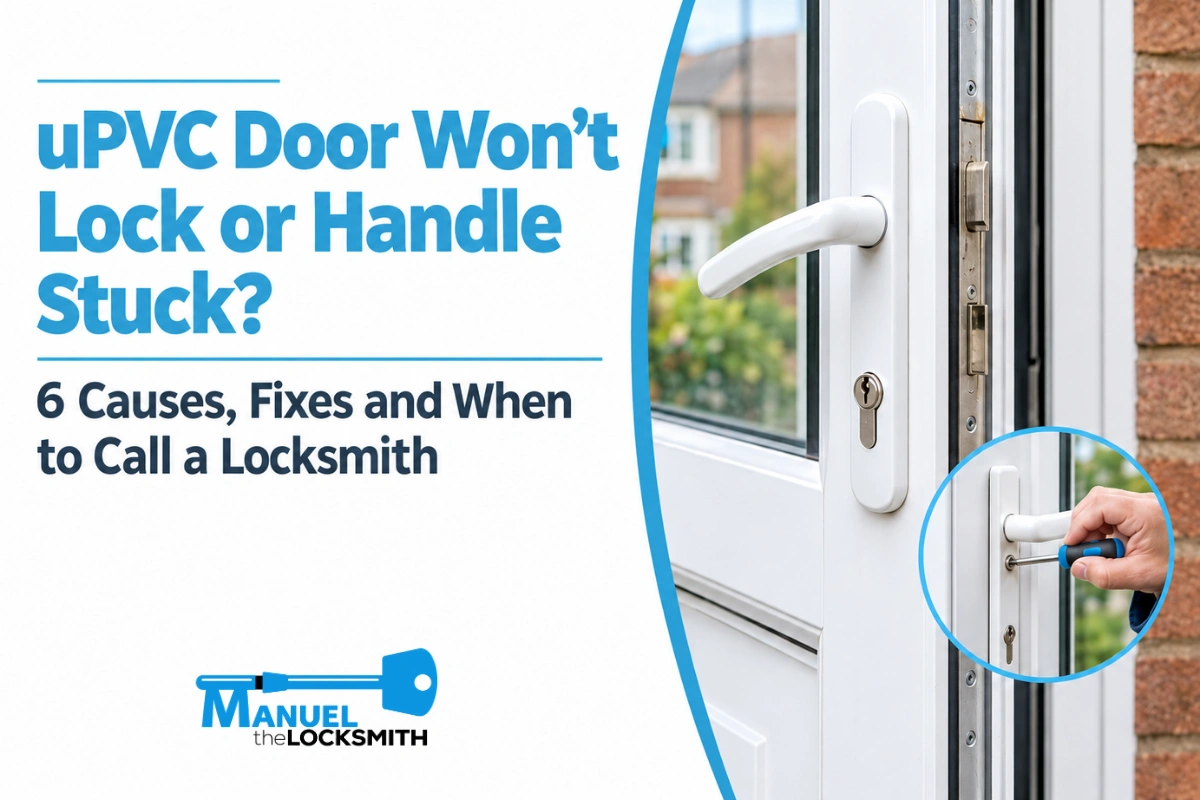 A uPVC door that won’t lock, or a handle that won’t lift, is one of the most common problems I attend in Staines-upon-Thames and the surrounding areas. It’s also one of the most annoying, because it tends to strike when you’re about to leave the house or go to bed. The good news is that the cause is usually simple, and I can fix many faults without replacing the whole door.
I’m Manuel, a local locksmith serving Staines-upon-Thames, Surrey, Middlesex and Berkshire. In this guide, I’ll explain six common reasons why a uPVC door will not lock, what you can safely check yourself, and when it is best to call a locksmith.
The quick answer
Several things usually cause a uPVC door that won’t lock or has a stuck handle: a dropped or misaligned door, a dry or dirty mechanism, a worn handle or failed gearbox, a worn key or damaged cylinder, cold and damp weather, or a break-in attempt. Try lifting the handle as you close the door, spray the mechanism with silicone or PTFE lubricant, and check the hinges. If the handle is loose, won’t lift, or the key won’t turn, stop forcing it and call a locksmith.
Try These Quick Checks First
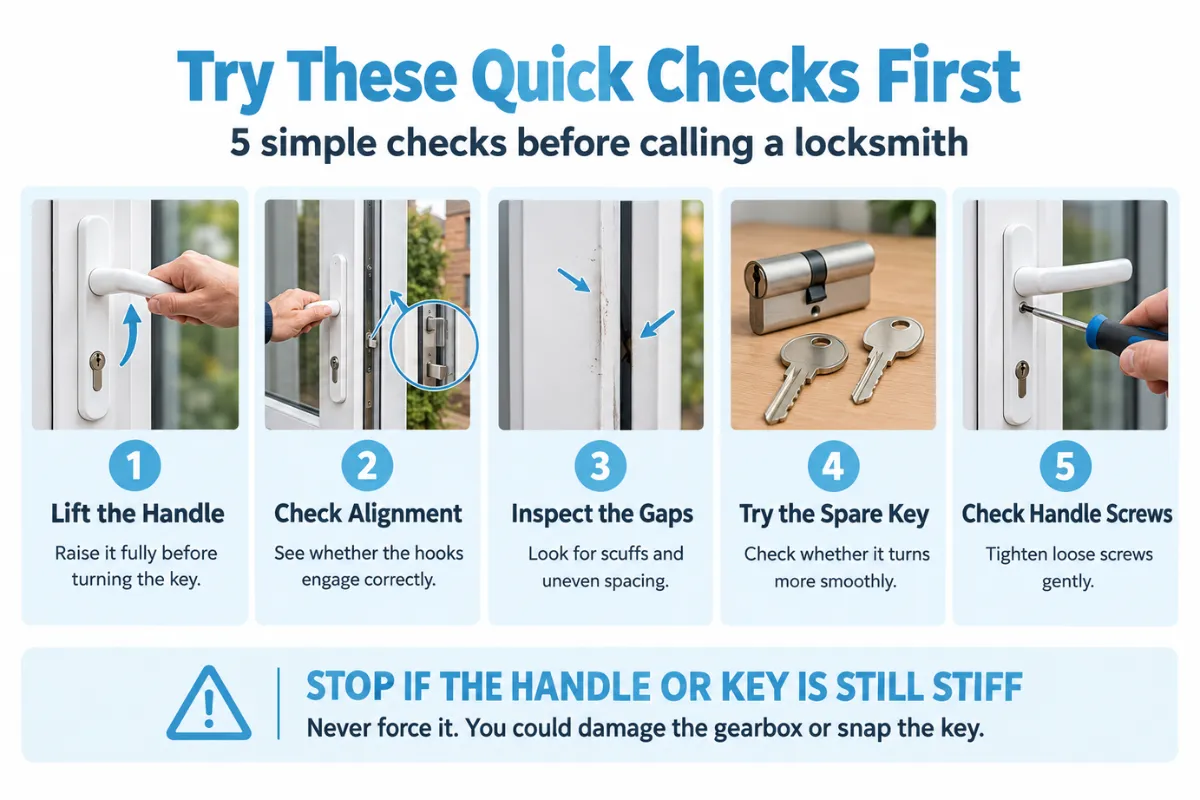 These take a couple of minutes and solve a surprising number of problems.
- Lift the handle fully before turning the key. On a multipoint lock, the key will only lock the door once the handle has been lifted all the way and the hooks are engaged. Many “my key won’t turn” call-outs come down to this.
- Close the door while lifting the handle. If it locks this way but not otherwise, the door has dropped, and the hooks aren’t meeting the keeps.
- Look for rubbing marks and uneven gaps. Check the edge of the door and the frame for scuffs, and compare the gap at the top and bottom.
- Try your spare key. If the spare works more smoothly, your original key is worn.
- Check the handle screws. If the handle wobbles, tighten the fixing screws gently. Don’t overtighten.
If the handle or key is still stiff, stop. Forcing a faulty mechanism can break the gearbox or snap the key inside the lock.
1. The door has dropped or gone out of alignment
Over time, hinges loosen, and the weight of the door pulls it down. The locking hooks and bolts then miss the keeps (the metal receivers on the frame), so the door either won’t lock or needs a lift and a slam to catch. Signs include a door that rubs on the frame, a stiff handle, and a key that only turns when you hold the door in a certain position.
You can usually adjust the hinges with a hex key and move the keeps on the frame. Make only small adjustments, a quarter turn at a time, and test the door after each one. If it doesn’t improve, or the door has dropped badly, I can realign it quickly. See my uPVC door repairs page.
2. The mechanism is dry, dirty or worn
A uPVC door lock has several moving parts: hooks, rollers and a latch. When they’re dry or clogged with dirt, the handle gets stiff, and the lock won’t throw smoothly. Spray a silicone or PTFE lubricant along the lock edge of the door, around the hooks and rollers, and wipe off the excess. Avoid thick grease, which attracts dirt. For the keyway, use a dry lock lubricant, not oil.
If the mechanism is still stiff after cleaning and lubricating, it’s likely worn and needs repair or replacement.
3. The handle is worn, or the gearbox has failed
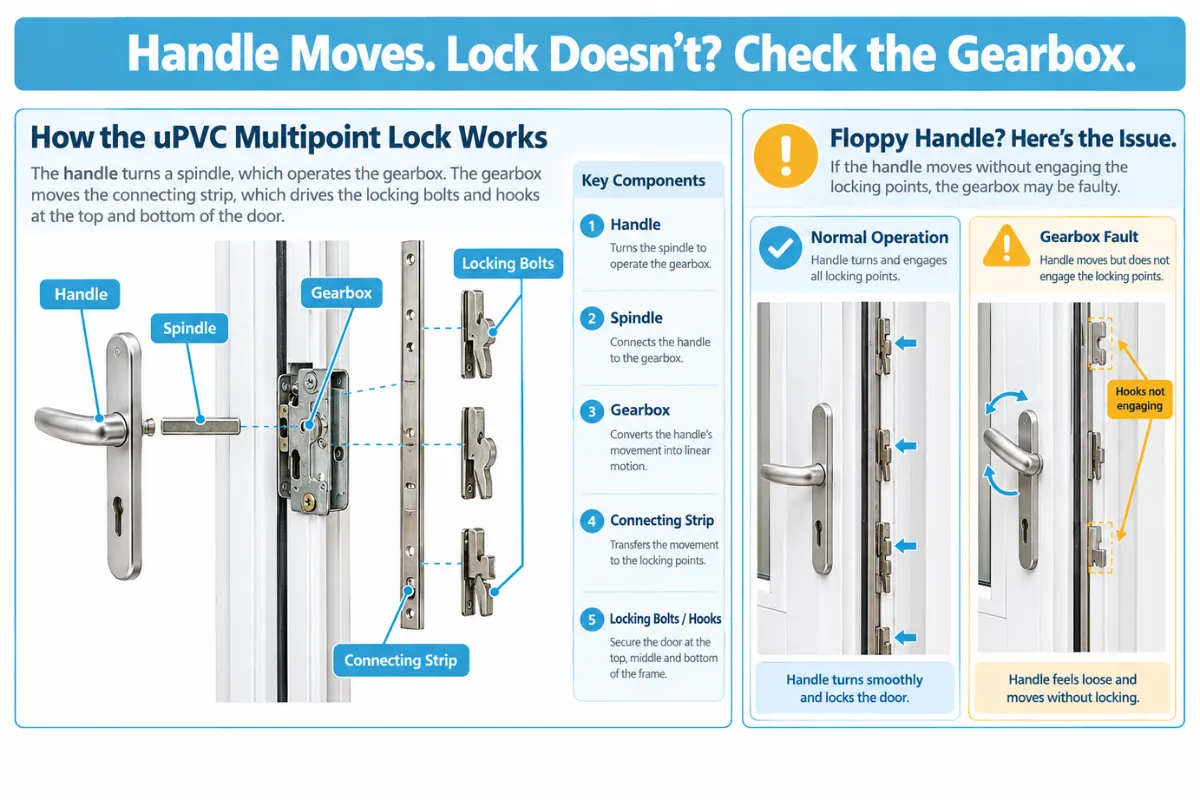 The gearbox is the part inside the door that turns the handle’s movement into bolts and hooks moving. When it fails, the handle may feel floppy, won’t spring back, lifts with no resistance, or lifts but doesn’t engage the bolts. A loose handle, or one that drops when you let go, is also a warning sign.
Tightening the handle screws (often under a small cover) sometimes cures a loose handle. If the handle still moves freely or the door won’t lock, the gearbox or handle needs replacing. Getting the right replacement matters, because gearboxes differ in size and fixing centres, and a wrong fit can leave the door insecure. My uPVC door lock replacement service covers this.
4. The key is worn, or the cylinder is damaged
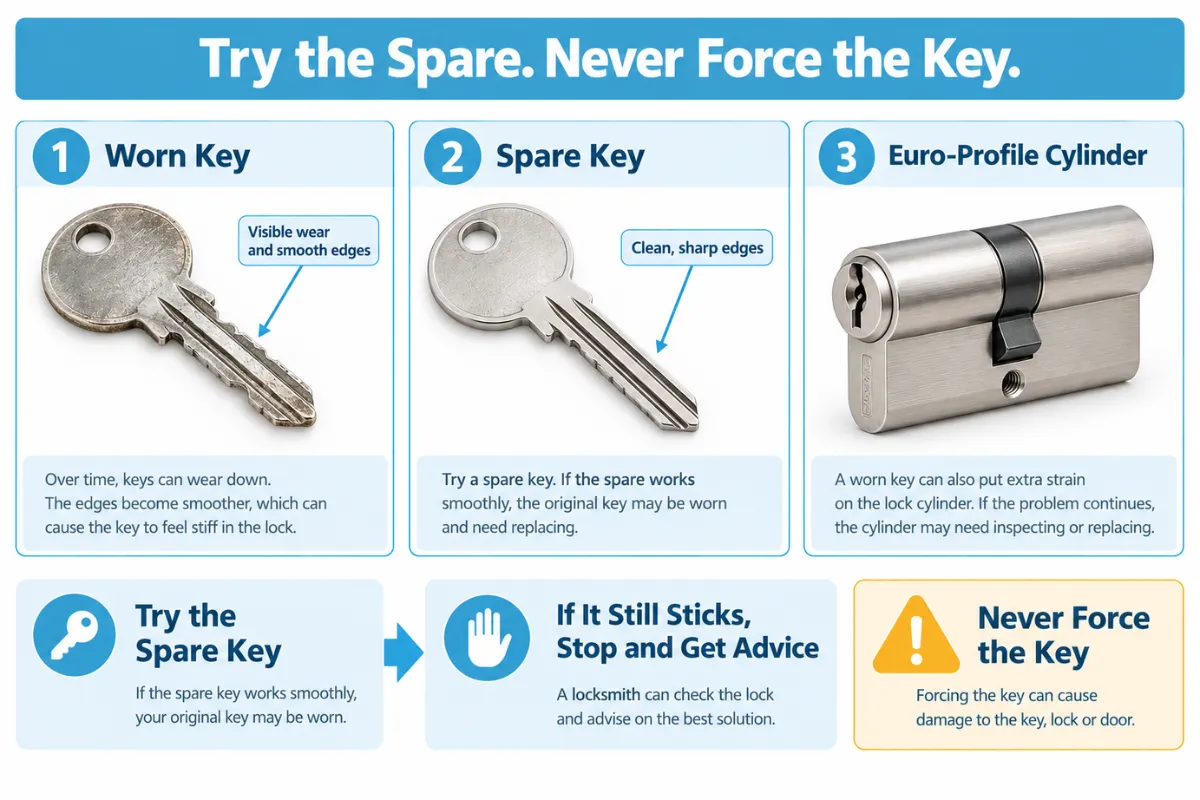
If the key is stiff to turn, or the lock only works with a bit of jiggling, the key or the cylinder (the barrel the key goes into) may be worn. Try your spare key first, as copies of copies wear quickly. When the spare works better, get a fresh copy cut from the original.
Don’t force a key that still sticks, because one that snaps in the lock makes the job harder. Should that happen, see my broken key extraction service. A worn cylinder is a quick replacement, and a good opportunity to upgrade to an anti-snap cylinder.
5. Hot and Cold Weather
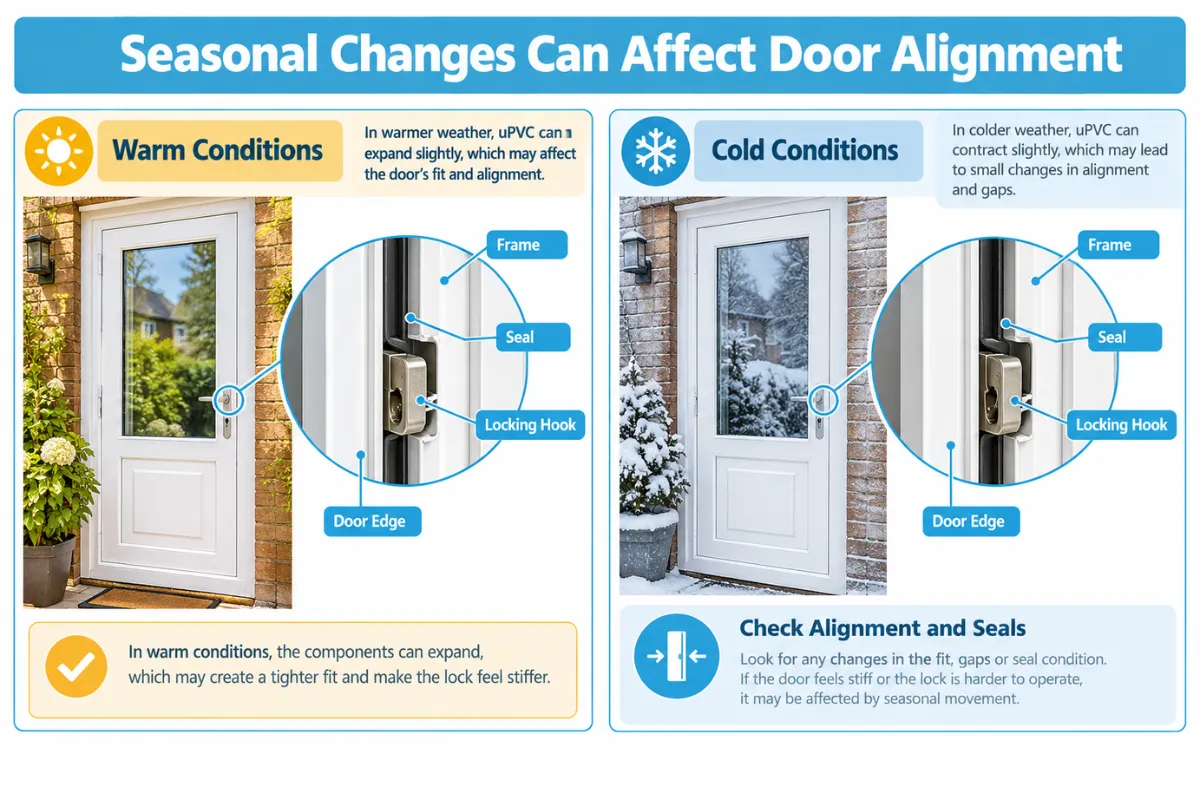
uPVC expands in heat and contracts in cold. Small changes in the position of the door, frame and seals can be enough to stop the hooks meeting the keeps. If your door worked fine in summer but sticks in winter, or the other way round, temperature is probably contributing. Damp and swollen seals can add to the problem.
Don’t slam the door or repeatedly force the handle. That puts extra strain on the mechanism. Weather often only exposes an underlying problem such as worn hinges or an ageing gearbox, so if it keeps coming back, have it inspected.
6. Damage after a break-in attempt
If the lock suddenly stops working and you can see scratches, fresh marks, a bent frame or a cylinder that looks out of place, someone may have tampered with it. A door that still closes may not be secure.
What to do:
- Don’t force the lock or try to take damaged parts apart.
- Photograph the damage if it’s safe to do so.
- Report a suspected attempted break-in to the police.
- Call a locksmith to check whether you can secure the door safely.
If you think an intruder may still be nearby, move to safety and call 999. My burglary repairs service restores the security of damaged doors and locks.
When to stop and call a locksmith
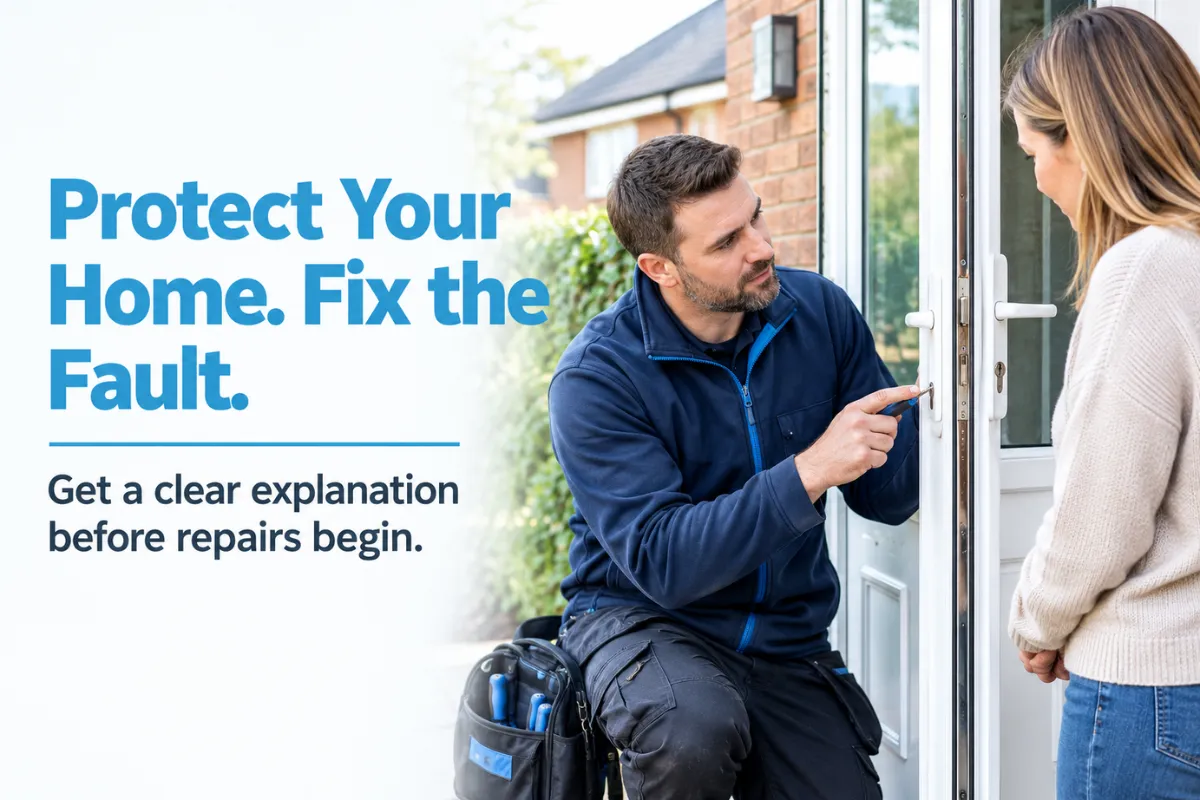 Call a locksmith if:
- the handle won’t lift or is stuck down
- the handle is loose, floppy or doesn’t spring back
- the key won’t turn, or has snapped
- the door won’t lock securely, and you need to leave the house
- You can see signs of forced entry
A door that won’t lock properly is a security risk, and may affect your home insurance, so it’s worth sorting quickly rather than living with it. And if you’re locked out, or locked in, here’s what to do first and my emergency locksmith service.
With the darker evenings here, it’s also a good time to give your whole home a quick check. My guide to 7 ways to secure your home on darker evenings is a good place to start.
Need your uPVC door fixed?
If your uPVC door will not lock, the handle is stuck, or the key will not turn, I can help identify the problem and explain your options.
I’m Manuel, an independent locksmith serving Staines-upon-Thames and surrounding areas across Surrey, Middlesex and Berkshire. Because I work directly with customers, you can speak to me about your lock problem rather than going through a call centre. Call me on 073 9999 2424.
My residential and commercial locksmith services include lock repairs, lock replacements and uPVC door repairs.
- Direct contact: You speak to Manuel, the locksmith who attends your job.
- Fully insured and DBS-checked: You get professional assistance from a locksmith you can trust.
- No call-out charge: We discuss the issue and pricing before work begins.
- Clear pricing: I explain the recommended work and the cost before I start.
If your door will not lock, don’t wait for the mechanism to fail.
Frequently asked questions
Why is my uPVC door handle stuck?
The most common causes are a dropped or misaligned door, a dry or dirty mechanism, a worn handle or a failed gearbox. Cold, damp weather can make a stiff handle worse. Don’t force it, as that can break the mechanism.
Why won’t my uPVC door lock even though the key turns?
Usually the hooks and bolts aren’t lining up with the keeps on the frame, often because the door has dropped. It can also be a faulty gearbox. Lifting the handle as you close the door can confirm a misalignment.
Can I fix a uPVC door lock myself?
Simple jobs such as lubricating the mechanism, tightening handle screws and making small hinge adjustments are safe to try. Leave gearbox and cylinder replacements to a locksmith, because the wrong part or a poor fit can leave your door insecure.
How much does it cost to repair a uPVC door lock?
It depends on the fault. A simple adjustment costs much less than a replacement gearbox. I give a free quote before starting any work, and there’s no call-out charge.
Can you fix it in one visit?
I can usually realign and adjust your door on site in one visit. If a part needs replacing, I’ll tell you what’s needed and the cost before I start.
Final Thoughts
A uPVC door that will not lock or has a stuck handle does not automatically need a new lock. Misalignment, worn handle components, a faulty gearbox, a damaged cylinder or a door that does not close correctly against the frame can all cause the problem.
Start by checking for obvious obstructions, and pay attention to when the problem occurs. Most importantly, don’t force the key or handle.
If your door remains difficult to operate or will not secure properly, getting me to check the fault can protect your home and prevent further damage.