Broken Key Extraction in Staines-upon-Thames
Surrey · Berkshire · Middlesex
Key snapped in the lock? I can usually get it out without damaging your door.

Surrey · Berkshire · Middlesex
Key snapped in the lock? I can usually get it out without damaging your door.
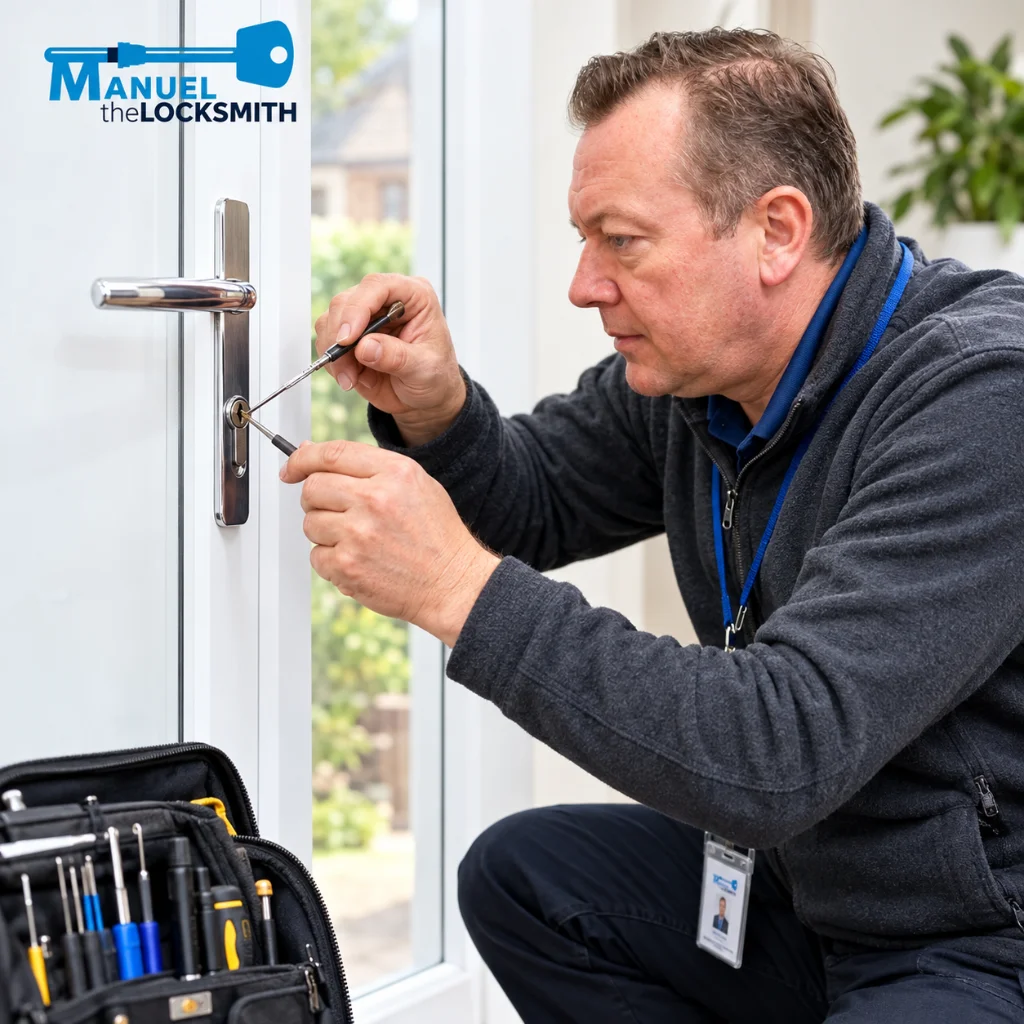
A snapped key is stressful, especially if you’re locked out. The good news is that most broken keys come out cleanly, and the lock keeps working afterwards.
I’m Manuel, a locksmith based in Staines-upon-Thames. I carry out broken key extraction across Surrey, Middlesex, Berkshire and West London, and most jobs take around 30 minutes.
✔ DBS-checked and fully insured
✔ Most Staines addresses reached in 20-30 minutes
✔ 12+ years of locksmith experience
✔ Price confirmed before any work begins
✔ No call-out fee
The safest way to extract a broken key is to leave it to a locksmith. Removing a snapped key looks simple, but the fragment sits against delicate pins inside the lock. One wrong move can push it deeper or damage the cylinder.
While you wait for me to arrive, a few simple rules will protect your lock:
Then call me. With the right tools and experience, most broken keys can be removed without unnecessary damage. Where appropriate, I use non-destructive entry techniques to help protect the existing lock and door.
Failed attempts to remove a key are the main reason a simple job turns into a full lock replacement. Pliers and improvised tools can scratch the inside of the lock, and a snapped tool can add a second broken piece to the problem.
Professional tools are made for this job. A tension wrench holds the lock steady while the fragment is drawn out, so the pins stay intact.
I also check the lock itself. Sometimes a key snaps because the lock was already worn or stiff. In that case, removing the fragment alone won’t stop it from happening again, so I’ll advise you on the best next step.
If the lock is showing signs of wear or damage, I can explain whether lock repair is appropriate or whether another solution would be better.
Broken keys don’t only happen in front doors. I carry the tools to deal with most lock types. Whatever your lock, mention it when you call. That way, I arrive with the right equipment.
Euro cylinders are the most common place for a snapped key. The extraction is quick, and the cylinder can often be kept.
Mortice and rim locks need a slightly different technique, but the aim is the same: remove the key without damage.
Sheds, gates and garages often use smaller locks. The same tools work on these too.
When I attend to a broken key problem, I assess the door and lock first, rather than replacing anything straight away.
To begin, I check the type and condition of the lock. Then I work out how the key broke.
Next, I establish where the remaining part of the key sits. From there, I decide whether I can extract it safely.
After that, I choose the appropriate locksmith tools and techniques. With careful handling, I then extract the remaining section wherever possible.
Once the key is out, I check how the cylinder and locking mechanism operate.
Finally, if the lock is stiff, worn, or failing, I explain what I found, since these faults often cause keys to snap.
If the lock needs repair, we can discuss the available options together. However, if the damage to the cylinder goes beyond practical repair, lock replacement may suit you better. In either case, I explain my reasoning before carrying out any additional work.
A key rarely snaps without warning. Usually, the lock or the key has been struggling for weeks. Spotting the signs early can save you a call-out.
Watch out for these warning signs:
If any of these sound familiar, act early. A worn key can be replaced quickly, and a stiff lock can often be fixed before it fails. As a result, you avoid a snapped key at the worst possible moment, such as late at night or on the way out to work.
Also, avoid hanging a heavy bunch of keys from a single key in the lock. The extra weight wears the cylinder and strains the key over time.
Most extractions are quick jobs, so the cost is usually lower than a repair or replacement. Even so, I always confirm the price before I start.
Typical call-outs include:
For a clear quote see my full price list.
I provide broken key extraction and locksmith services across Staines-upon-Thames, Surrey, Middlesex, Berkshire and West London.
Staines-upon-Thames · Chertsey · Egham · Weybridge · Walton-on-Thames · Virginia Water · Woking · Cobham · Addlestone
Windsor · Slough · Ascot · Old Windsor · Wraysbury
Ashford · Sunbury-on-Thames · Shepperton
What’s the safest way to extract a broken key from a lock?
Call a locksmith. The right tools remove the fragment without scratching the pins or damaging the cylinder. In the meantime, don’t force the lock or try to pull the piece out.
Why did my key snap?
Usually metal fatigue, a worn or stiff lock, or too much turning force. If the lock is worn, get it checked so it doesn’t happen again.
Can a broken key damage the lock?
Yes, especially if removal is forced. A careful, tool-based extraction is much safer than pliers alone.
Will I need a new lock afterwards?
Not usually. Most locks work perfectly once the fragment is out. I only suggest replacement if the lock has been damaged.
How long does it take?
Most extractions take 20-30 minutes, depending on the lock and how deep the break is.
Can you cut a new key on the same visit?
In most cases, yes. If you have a spare key, I can usually cut a replacement while I’m there.
Does this work on UPVC door locks?
Yes. UPVC cylinders are one of the most common places for a broken key, and the process is much the same.
What about padlocks and shed locks?
The same approach works. I carry tools for most lock types, not just front doors.
How much does it cost?
It’s usually one of the lower-cost call-outs. The exact price depends on the lock and how accessible the break is, so call for a quote.
How quickly can you get here?
Most Staines-upon-Thames addresses are within 20-30 minutes. Surrounding towns usually take 30-45 minutes.